In this article
FOUNDER FIELD NOTES · HIKMAH AI × 1CLICKREPORT
I run a marketing agency in Dubai, and the question that pushed me to build differently was simple: how can we serve more clients without rebuilding a larger team every time we grow?
Doing less work for each client was never a useful answer. Clients still need a website that explains their business, campaigns that deserve their budget, and someone who notices when the numbers stop making sense. They are paying for judgement and delivery, not an impressive collection of AI subscriptions.
At Hikmah AI, our AI-native marketing agency in Dubai, we use 1ClickReport as the operating system for the analytical side of that work. It gives us a place to connect marketing data, ask questions in context and organise the evidence behind our next decisions. Around it sit the tools that build websites, prepare content and execute approved work.
The agency problem is bigger than producing more content
When people discuss AI agencies, the conversation often starts with output: more articles, more ad variations, more reports. But output is only one part of delivery. Someone still has to work out which client needs attention, what changed, whether the data is trustworthy and what can safely happen next.
That coordination becomes expensive surprisingly quickly. A website change affects a landing page. A landing-page change affects conversion rate. A tracking change affects the apparent performance of an ad campaign. If each task lives in a different conversation, the team can spend its day rediscovering information it already had.
My goal is to make the agency more repeatable, in the way a useful product is repeatable. Each new client should benefit from a better operating process, rather than require us to invent the process again. That does not make every client identical. It makes the way we understand their differences more consistent.
The unit of work is therefore not “generate ten posts.” It is a client objective supported by a defined workflow: establish the baseline, investigate the constraint, prepare a change, review it and learn from what happens afterward.
What we mean by an agency operating system
We use “operating system” to describe the role 1ClickReport plays in our working process. It is the shared analytical layer between a client's goals and the tasks we decide to do. It is not a claim that one application replaces every publishing tool, advertising interface or client conversation.
The distinction matters. A useful analyst should help us see how channels relate to each other. Search Console can tell us which search queries earned clicks. GA4 can help us understand what those visitors did. An advertising account can explain delivery and spend. None of those views, by itself, is the complete client business.
With the relevant accounts connected, the analyst can work from that marketing context instead of asking us to paste a fresh set of screenshots into every conversation. We can also use the connected context inside Claude or ChatGPT through MCP. The product remains the AI marketing analyst; those assistants are additional places to work with it.
Website editing and deployment still belong to the website workflow. Publishing needs the right permissions and integrations. Budget decisions need an account owner. A client-facing claim needs someone willing to put their name behind it. Keeping those boundaries visible is part of making an agency dependable.
Start with a client brief that an agent can actually use
An agent cannot compensate for an unclear brief. “Grow the business” leaves too many decisions unstated. We need to understand what the client sells, who buys it, which locations matter, how enquiries are handled and which outcomes the business can genuinely fulfil.
For a clinic, an enquiry is not automatically a booked appointment. For an e-commerce business, an advertising purchase event is not necessarily the same thing as a completed, retained order. For an industrial business, the most valuable opportunity might begin with a specialist enquiry rather than a transaction on the website.
Those differences should shape the questions we ask the analyst. They should also shape the work we allow an agent to propose. A workflow built around purchases should not be copied into a lead-generation account and judged by the same surface-level metrics.
- Business context: offer, audience, geography and practical delivery constraints.
- Measurement context: connected accounts, conversion definitions, currency and reporting period.
- Work context: the objective, the current hypothesis, previous changes and who approves the next action.
This is how we approach the idea of an agent for each client and goal. The point is to preserve a useful frame for the work, rather than give a generic chatbot a client name and hope that becomes a strategy.
SEO and AEO: a workflow that continues after publishing
Search work is a good example because it exposes the weakness of treating AI as a writing machine. Publishing an article is an action. Getting the right prospective customer to find it, understand it and take a useful next step is a much longer process.
For an SEO or AEO objective, the analytical starting point is the existing evidence. Which pages already receive clicks? Which queries match the client's services? Where do visitors land, and what happens next? Is an apparently weak page actually contributing useful enquiries, or are we only looking at its rankings?
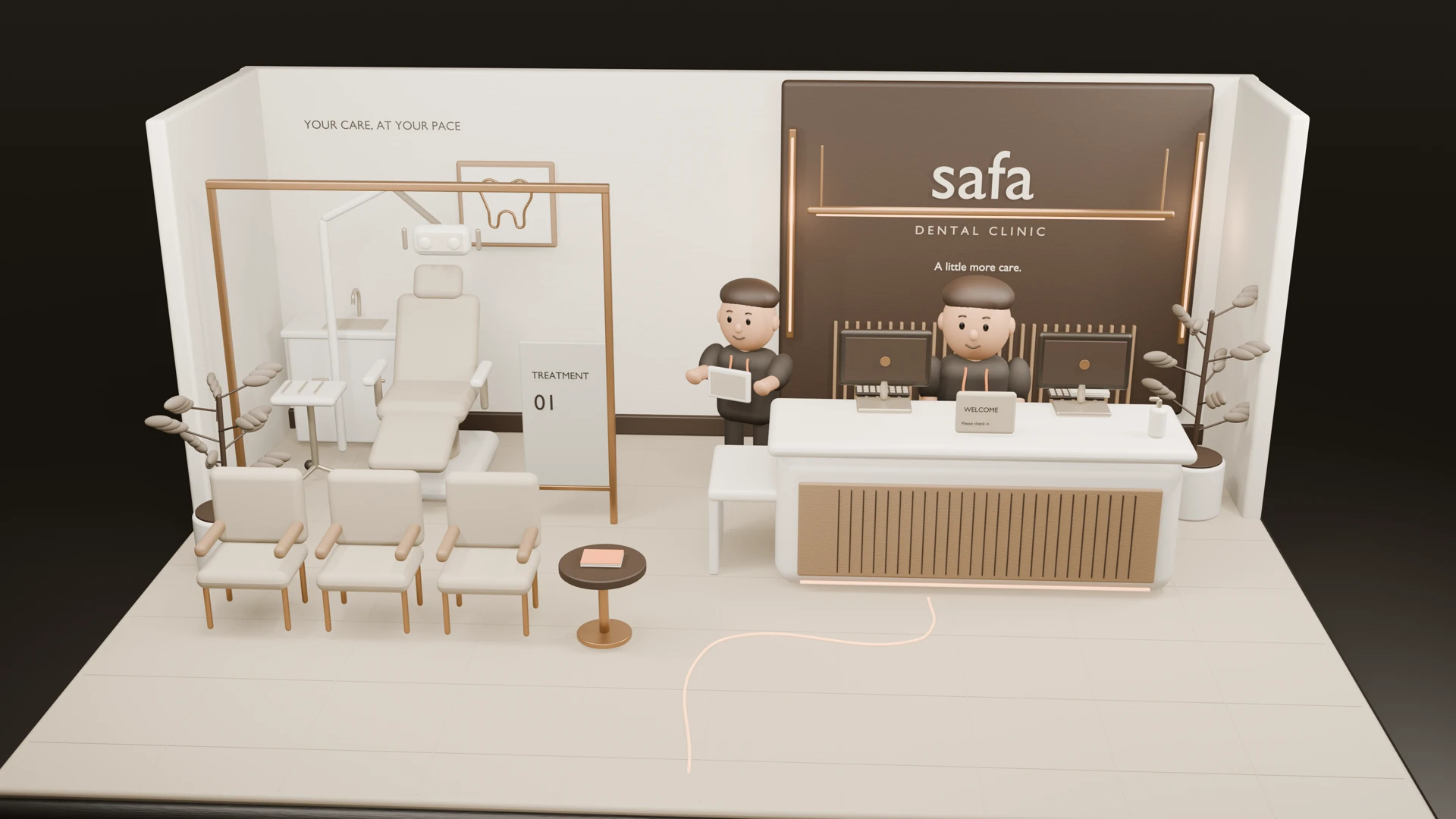
The next part is research and preparation. An agent can help examine a topic, identify unanswered questions and prepare proposed page changes. That work needs the business context from the brief. A clinic's service page, for example, needs accurate service information and an appropriate next step; adding more generic paragraphs is not a substitute.
Then comes the website and publishing workflow. The proposed change should be reviewed in its real layout, with its links, title and calls to action. Any publication or deployment happens through the tools and permissions set up for that site. Indexing status is checked separately; submitting a sitemap does not mean the search engine has accepted every page into its index.
For AEO, we also separate being cited from receiving a visit and receiving a useful enquiry. Those are different outcomes. An AI answer can reference a business without sending measurable traffic. A referral can bring a reader who never becomes a customer. Reporting should explain the difference rather than combine all three into one success number.
Finally, the workflow returns to observation. Did the right page become discoverable? Did relevant clicks change? Did visitor behaviour improve? What else changed during the same period? That last question protects us from claiming that every positive movement was caused by our latest edit.
Hikmah offers AEO services for businesses working on AI-search visibility. Our operating principle is to connect that delivery to evidence, while recognising that neither a traditional ranking nor an AI recommendation can be guaranteed.
Paid media: use the analyst to challenge the obvious answer
Paid advertising creates a different version of the same coordination problem. The ad account tells us what it attributes to a campaign. The website and the business may tell a different story. We want those differences investigated before a confident recommendation becomes an expensive action.
Consider an illustrative review: a campaign's cost per lead falls, but the client says useful enquiries have declined. Increasing spend immediately would assume that all leads are equivalent. A better review asks what changed in the form, creative, audience, landing page and conversion definition, and whether the client has evidence about enquiry quality.
1ClickReport helps frame that investigation across the connected marketing data. Where lead quality or an offline outcome is not connected, we still need that information from the client. An analyst should make the missing evidence visible; it should not invent a connection or quietly treat every form submission as a customer.
The output we want is specific: the account and dates reviewed, the finding, the proposed action, the budget effect and the reason to revisit the decision. “Optimise the campaign” is a task label. “Review this landing-page change before reallocating this budget” is something an operator can inspect.
This is also why we keep creative and performance work connected. An ad that attracts the wrong expectation can create a problem that no dashboard fixes. The message, landing page and offer have to agree.
A website is part of the delivery system
Our agency website connects website work, search, advertising and conversion improvement. That reflects the client problem more closely than treating each as a separate finished project. A fast campaign launch has limited value if the enquiry form is broken or the service page leaves an obvious buying question unanswered.
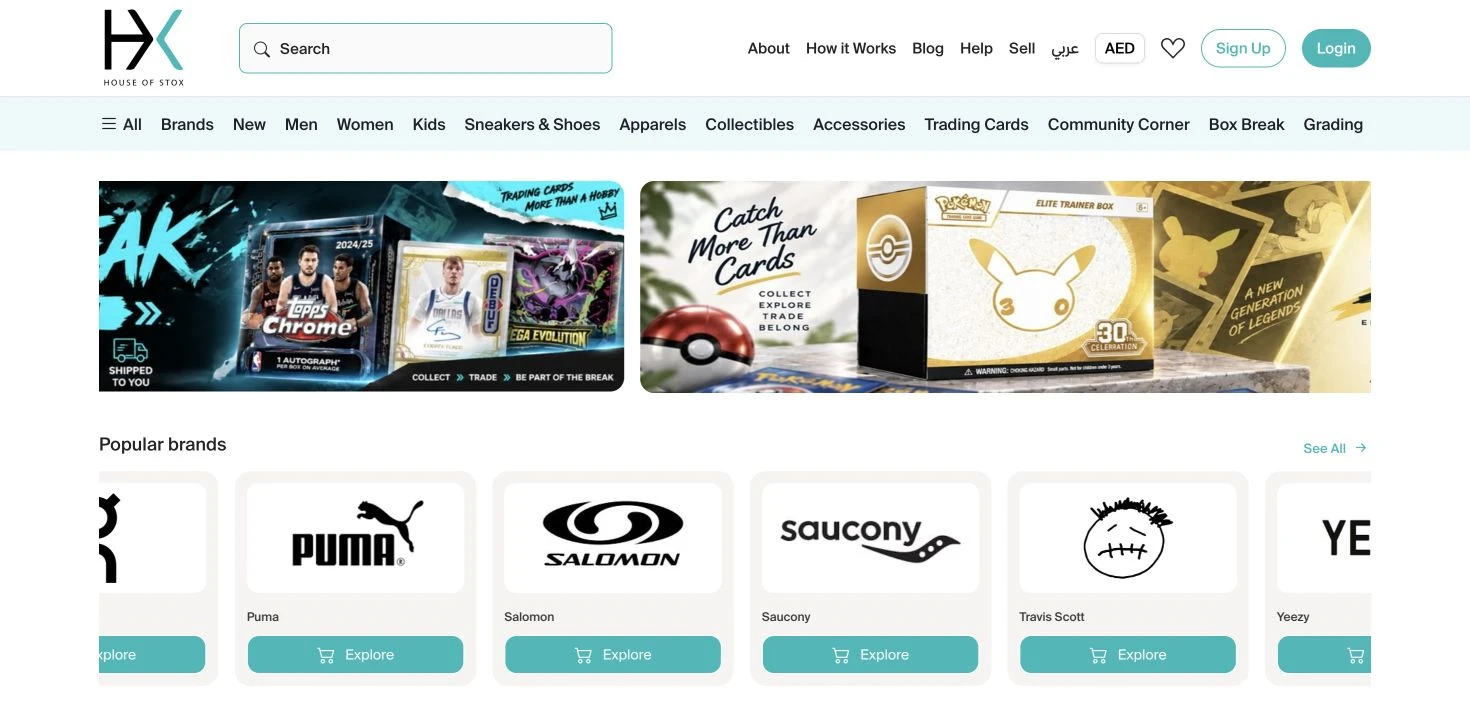
The public Hikmah portfolio includes work across healthcare, e-commerce and specialist businesses. The relevant lesson is not that one template works everywhere. It is that the operating questions remain useful across different businesses: what does the visitor need, what is the next action and can we measure whether it happened?
For each change, the analyst's findings and the website team's implementation need to meet. If the finding is that visitors cannot understand the offer, publishing another traffic article is probably not the first response. If qualified visitors abandon an important form, the next investigation belongs in the conversion path.
The agents propose. People remain accountable.
I want an agency that gets more capable without adding coordination at the same rate. That ambition only works if we are precise about responsibility. Human review is part of the operating model, not a decorative sentence attached to an autonomous promise.
Hikmah's founder and delivery background explains that combination of product-building and operations. My co-founder, Kristina Zaalishvili, runs delivery. The useful question is not whether an agent can produce a recommendation. It is whether the agency can explain, approve and follow through on the recommendation consistently.
| Work | Where an agent helps | What people still decide |
|---|---|---|
| Account review | Retrieve data and identify changes worth investigating | Whether the finding is material to the client |
| Search content | Research, outline and prepare proposed revisions | Accuracy, business fit and publication approval |
| Advertising | Compare delivery and prepare an action proposal | Budget authority, risk and the client's priorities |
| Website work | Assist with implementation and checks | Acceptance criteria and release approval |
| Client reporting | Prepare evidence and unanswered questions | What to recommend and what to commit to next |
For me, scaling like a product means making that judgement easier to apply repeatedly. It does not mean pretending the client no longer needs a responsible operator.
The report should explain a decision
A report becomes useful when a client can understand what changed, what we believe it means and what happens next. A collection of upward charts can hide a weak explanation just as easily as a long written summary can.
We want to keep facts, interpretations and actions separate. “This page received more relevant clicks” is a fact we can inspect. “The revision contributed to that change” is an interpretation requiring context. “Expand the approach to another page” is a decision with its own cost and uncertainty.
The same discipline applies to the agency's own story. I am not using this article to claim a fixed number of hours saved, a guaranteed return or that every client improves after a particular number of weeks. Those claims would need a defined measurement period and evidence we can share.
The strongest proof is work a reader can examine: the real question, the relevant source data, the proposed change and the later outcome. That is the kind of agency evidence worth producing more of.
What I would tell another founder building this way
Start with one recurring client decision that takes too much effort to reconstruct. Connect the data needed for that decision. Write down what the agent may do, what it may only propose and what remains outside the workflow. Run the process with a human watching before expanding it.
Keep a practical record: what was checked, what changed, who approved it and when it should be reviewed. Otherwise, automation can make the agency busier without making it easier to understand. More activity is not automatically better service.
Be particularly careful with the attractive promise that an agency can run itself. A routine can run on a schedule where it has been configured to do so. That does not mean every client account is continuously optimised, every tool is connected or every proposed action is appropriate. Reliability comes from designing and checking the whole workflow.
That is what we are building toward at Hikmah: an agency where the analytical context carries forward, the tools help us do useful work and people stay responsible for the outcome. 1ClickReport gives us the analytical foundation. The agency turns that foundation into scoped delivery for a real business.
Questions about the Hikmah and 1ClickReport model
Are Hikmah AI and 1ClickReport connected?
Yes. Hikmah AI is our agency arm, and 1ClickReport is our marketing analytics product. We use the platform in the agency's analytical workflow. This article discloses that shared ownership.
Does 1ClickReport replace the agency team?
No. It supports analysis with connected marketing data. People still set the objective, review proposed work, obtain approvals and remain accountable for delivery.
Does every action happen inside 1ClickReport?
No. Website implementation, publishing and deployment also involve the relevant external tools, integrations and permissions. The platform is the analytical foundation of the operating process.
Can I use 1ClickReport without hiring Hikmah?
Yes. You can use 1ClickReport as a software product without buying agency services from Hikmah.
Does this model guarantee rankings or advertising results?
No. Agents can assist with research, analysis and execution, but business outcomes depend on the offer, implementation, customer behaviour and external platforms.