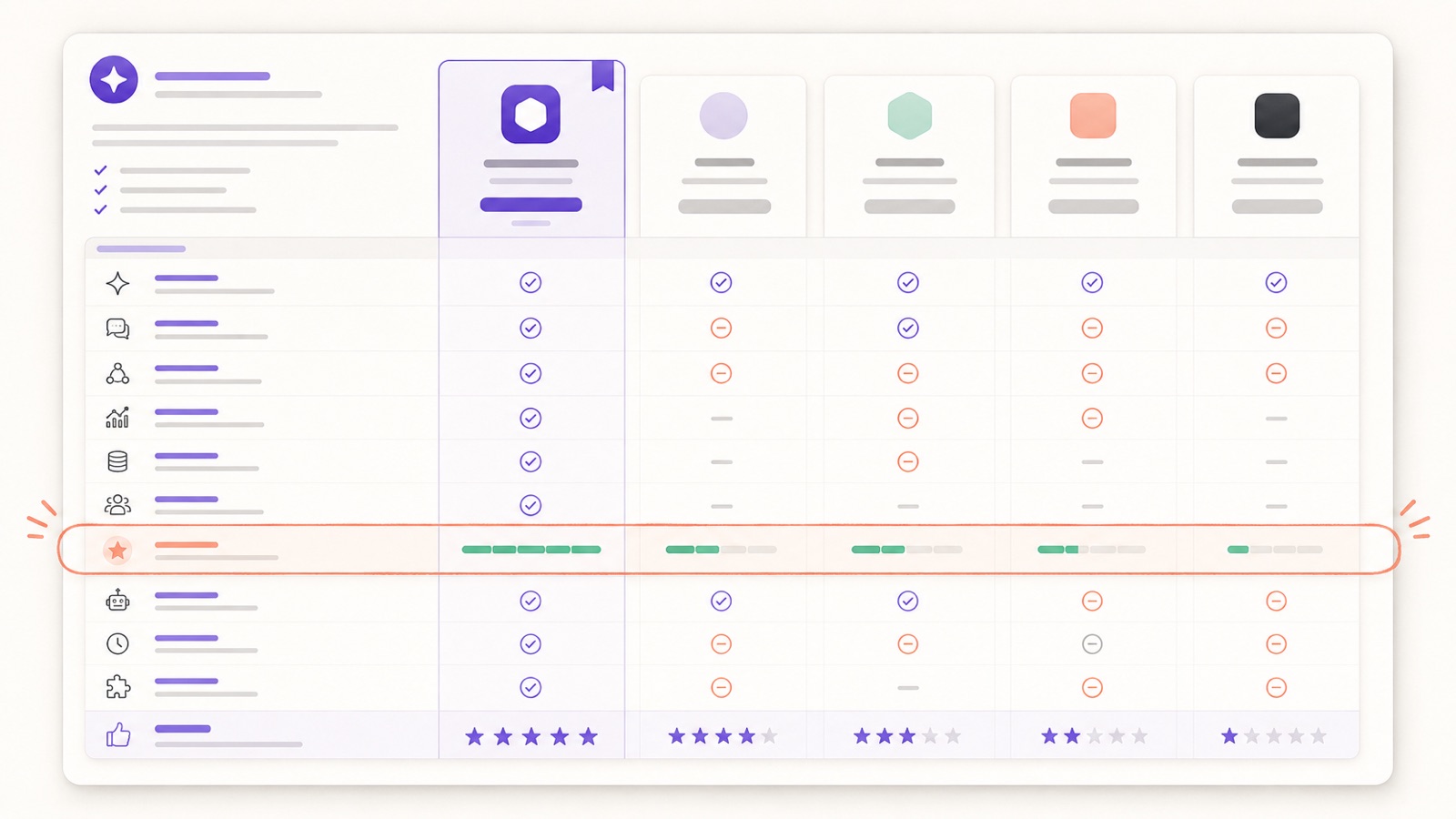
- There's no single "best" — there are two camps. Established PPC optimizers (Optmyzr, Adalysis, Opteo, WordStream) are mature and rule/recommendation-driven. AI-native agents (1ClickReport, Ryze) reason over data and act in plain English.
- Judge tools on five things in 2026: cross-channel reach, reasoning vs fixed rules, approval/safety, AI-native interface, and price.
- Cross-channel is the new differentiator. Most PPC tools are search-first; very few reason across Google and Meta on blended numbers.
- Use platform-native AI as a free baseline — then add a tool for the vantage point and reasoning the platforms don't give you.
- Safety matters: always check whether a tool acts automatically or asks first. 1ClickReport is approval-first (read-only audits, paused campaigns, confirm every change).
Search "best AI marketing tools" and you'll drown in listicles that rank 40 products you'll never use. This isn't that. It's a focused guide to the tools that actually help you manage paid ads with AI in 2026 — the category where the money is and where "AI" means something concrete.
Full disclosure: we make 1ClickReport, one of the tools below. So we've tried to write the guide we'd want to read — honest pros and cons for every option, clear about where competitors are stronger, and clear about where we're uncertain rather than inventing specifics. The goal is a buyer's guide you can trust, not an ad.
What to look for in an AI ad tool in 2026
Before the rankings, here's the rubric. After testing a lot of these, five criteria separate genuinely useful tools from dashboards with a chatbot bolted on.
1. Cross-channel reach
Most "PPC tools" were built for search — Google Ads and Microsoft Ads. That's fine if search is all you run. But if you spend on Google and Meta (Facebook/Instagram), the most valuable question is cross-channel: "where is my next dollar best spent across both?" Only a tool that sees every channel can answer it. Ask: does it actually connect Meta, or just search?
2. Reasoning vs fixed rules
There's a real difference between a tool that fires pre-set rules ("if CPA > $40, cut budget 10%") and one that reasons over your data ("spend is up but conversions held — here's why, and here's the trade-off"). Rules are predictable and fast; reasoning catches the situations you never thought to encode. The best modern tools lean on an actual LLM, not just a recommendation engine.
3. Approval & safety
Letting software touch live ad budgets is a trust decision. Some tools apply changes automatically; some only suggest. Neither is "wrong" — but you should know which. Look for read-only analysis, the ability to review before anything spends, spend caps, and a clear audit trail. Automation without guardrails is how you wake up to a drained account.
4. AI-native interface
In 2026 the interface itself is a feature. A growing class of tools lets you work in plain English — in a chat or even inside an AI assistant like Claude via MCP (Model Context Protocol) — instead of clicking through dashboards. That's not a gimmick: asking a question and getting an answer with the math done beats hunting across five tabs.
5. Pricing & fit
Established PPC suites often price by ad spend or seats and assume an agency or in-house team. Newer AI tools tend toward simpler monthly plans. Match the tool to your stage: a solo founder, a 30-client agency, and an ecommerce brand have very different needs and budgets.
Quick gut check: if a tool can't see all your channels, can't explain why it's recommending something, and won't let you approve changes, it's automation from 2020 with a 2026 label.
The best AI marketing automation tools for ads in 2026
We've grouped these into two camps — AI-native agents (the newer, reasoning-driven category) and established PPC optimizers (mature, recommendation/rule-driven) — plus the free platform-native option. Pick the camp that fits how you want to work, then the tool.
AI-native agents
1. 1ClickReport — best for cross-channel ad management inside Claude
1ClickReport is a Claude-native marketing analyst and MCP server. You connect Google Ads, Meta (Facebook & Instagram), GA4, Search Console and Stripe with OAuth, then run your marketing by asking Claude in plain English — no dashboard. It analyzes across channels, reasons over your live data instead of firing fixed rules, and is approval-first: audits are read-only, new campaigns are created paused, and every change needs your confirmation. On the Team plan it can also create and manage Google and Meta campaigns.
- Pros: true cross-channel (Google + Meta + analytics together); reasons over data and explains itself; approval-first safety model; works inside Claude via MCP, so it lives where you already think.
- Cons: it's Claude/MCP-native, so you work in chat rather than a traditional PPC dashboard — great for some, an adjustment for others. Campaign creation/management is gated to the Team plan. Newer than the established suites.
- Best for: solo marketers, founders and lean teams who run both Google and Meta and want plain-English control with guardrails.
2. Ryze — AI that manages ads across channels (including AI search)
Ryze (get-ryze.ai) positions itself as an AI that manages ads across multiple channels — including Google and Meta, with messaging around emerging AI-search surfaces like ChatGPT and Perplexity — and is, like us, oriented toward Claude/MCP. It's the closest peer to 1ClickReport in the AI-native, cross-channel camp.
- Pros: multi-channel AI ad management; forward-looking about AI-search ad placements; AI-native approach rather than a rules engine.
- Cons: we'd rather you verify current channel coverage, pricing and how much it automates directly on their site than take our word for specifics — this is a fast-moving product and we don't want to misstate it.
- Best for: teams who want AI-driven cross-channel management and are interested in newer AI-search ad surfaces.
Established PPC optimizers
3. Optmyzr — best for power users and agencies running search at scale
Optmyzr is a long-standing, well-regarded PPC optimization platform for Google and Microsoft Ads. It's deep: bid and budget tools, rule engines, scripts, reporting, and a large library of one-click optimizations. It has added AI-assisted features, but its core is a powerful recommendation-and-rules toolkit aimed at people who live in search accounts.
- Pros: very deep search feature set; mature, trusted, strong for managing many accounts; granular control for experts.
- Cons: search-centric (not a cross-channel-into-Meta reasoning tool); built around rules/recommendations more than open-ended LLM reasoning; depth means a learning curve. Confirm current pricing on their site.
- Best for: agencies and advanced PPC managers running serious Google/Microsoft search volume.
4. WordStream — best for small businesses who want simple guidance
WordStream has long been the friendly on-ramp for small businesses doing their own PPC. Its tools (including the well-known free Google Ads grader) surface clear, prioritized recommendations to improve search and, in places, social campaigns without needing an expert in the seat.
- Pros: approachable and beginner-friendly; useful free audit/grader; prioritized, plain recommendations; good for DIY small-business advertisers.
- Cons: more guided-recommendations than autonomous AI agent; less suited to advanced cross-channel optimization; capabilities and packaging have shifted over the years, so check what's current.
- Best for: small-business owners managing their own ads who want a gentle, guided path.
5. Adalysis — best for automated PPC audits and alerts
Adalysis specializes in continuous PPC auditing and ad testing for Google and Microsoft Ads. It runs automated checks against best practices, monitors accounts for issues, and is especially known for A/B ad testing and surfacing problems you'd otherwise miss.
- Pros: strong automated auditing and monitoring; excellent ad-testing workflows; catches account issues continuously.
- Cons: search-focused, not cross-channel-into-Meta; built around best-practice checks and rules rather than open-ended reasoning; primarily an audit/testing tool, not a full plain-English agent.
- Best for: teams who want rigorous, always-on Google Ads auditing and structured ad testing.
6. Opteo — best for guided, one-click PPC improvements
Opteo watches Google Ads accounts and serves a steady stream of specific, prioritized improvement suggestions you can apply (often in one click), plus monitoring and reporting. It's a clean middle ground between full manual work and heavyweight platforms.
- Pros: clear, actionable recommendations; easy to apply changes; nice monitoring and reporting; gentler learning curve than the biggest suites.
- Cons: Google-Ads-centric (not cross-channel reasoning); recommendation-engine model rather than an LLM you converse with; verify current pricing/coverage on their site.
- Best for: in-house marketers and smaller agencies who want guided, high-quality Google Ads suggestions.
The free baseline
7. Platform-native AI (Performance Max, Advantage+) — best free starting point
Don't overlook what's already in your accounts. Google's Performance Max and automated recommendations, and Meta's Advantage+, are AI-driven, free, and genuinely capable for in-platform optimization. They're the sensible baseline before you pay for anything.
- Pros: free; deeply integrated; strong automated bidding and creative optimization within each platform.
- Cons: each platform is blind to the others and optimizes for its own spend; limited transparency into why; can't make cross-channel trade-offs or answer blended questions.
- Best for: everyone, as a foundation — then add a cross-channel tool for the vantage point the platforms can't provide.
Side-by-side: how they compare on the 2026 criteria
A simplified view across the five criteria. "Cross-channel" means reasoning across Google and Meta (not just search). Treat this as a directional summary — always verify current capabilities and pricing on each vendor's site.
| Tool | Cross-channel (Google + Meta) | LLM reasoning | Approval / safety | AI-native interface | Best fit |
|---|---|---|---|---|---|
| 1ClickReport | Yes | Yes (Claude) | Approval-first | Yes (MCP / Claude) | Solo + lean teams, both channels |
| Ryze | Yes (verify) | Yes | Verify | Yes (AI-native) | Cross-channel + AI search |
| Optmyzr | Search-focused | AI-assisted, rules core | Configurable | Dashboard | Agencies, search at scale |
| WordStream | Mostly search | Recommendations | Guided | Dashboard | Small-business DIY |
| Adalysis | Search-focused | Rules / checks | Audit-led | Dashboard | Audits + ad testing |
| Opteo | Google-focused | Recommendations | One-click apply | Dashboard | Guided Google Ads |
| Platform-native AI | No (per-platform) | Automated, opaque | Platform controls | In-platform | Free baseline |
Which one is right for you?
If you're a solo marketer or founder
You want power without a platform to learn and without spending on budget you might not have. Start with platform-native AI as your free baseline, then add an AI-native agent that runs both channels in plain English. 1ClickReport fits here: ask Claude a question, get the cross-channel answer with the math done, approve the changes you like. WordStream is a fair pick if you're early and want guided search help.
If you run an agency or manage many accounts
Depth and scale matter most. Optmyzr is the heavyweight for search at volume; Adalysis is excellent for systematic auditing and testing across client accounts; Opteo is a lighter option for guided improvements. If clients spend across Google and Meta and you want plain-English cross-channel analysis and approval-gated changes, an AI-native agent like 1ClickReport complements those tools well.
If you're an ecommerce brand
Your reality is revenue, not platform-reported ROAS — and you live on both Google and Meta. Prioritize cross-channel reasoning plus a link to actual revenue. Tools that connect Meta, Google, GA4 and Stripe (like 1ClickReport) can answer "what's my blended ROAS and where should the next dollar go?" — the question that decides profit. Lean on platform-native AI for in-platform creative/bid optimization underneath.
Try the cross-channel, approval-first option — free for 7 days
Connect Google Ads, Meta, GA4 & Search Console in about 60 seconds and run your marketing from Claude — analyze across channels, find wasted spend, and approve every change. No dashboard to learn.
Go deeper: the AI ad management playbooks
Want the how-to behind the category? These guides go channel by channel:
Frequently asked questions
What are the best AI marketing automation tools in 2026?
It depends on what you run. For PPC search optimization, established tools like Optmyzr, Adalysis and Opteo are strong. For small-business simplicity, WordStream is the classic pick. For AI-native, cross-channel ad management you ask in plain English, 1ClickReport (Claude + MCP, Google and Meta together, approval-first) and Ryze (multi-channel AI ad management) lead the newer category. The platform-native AI inside Google Ads and Meta is free and worth using as a baseline.
What's the best AI for managing ads across Google and Meta together?
Most established PPC tools focus on Google/Microsoft search and don't reason across Meta. For true cross-channel decisions — like moving budget between Google and Meta on blended ROAS — you want an AI agent that sees both. 1ClickReport connects Google Ads and Meta (Facebook & Instagram) plus GA4, Search Console and Stripe to Claude via MCP, and Ryze also positions itself as multi-channel AI ad management.
Are AI ad tools safe — will they change my campaigns automatically?
It varies by tool, so check the settings before connecting. Some apply recommendations or run automated rules. 1ClickReport is approval-first by design: audits are read-only, new campaigns are created paused, and every change requires your explicit confirmation. Whatever tool you choose, confirm whether it acts automatically or asks first, and whether it offers spend caps.
Do I still need a PPC tool if Google and Meta have their own AI?
The platform-native AI (Performance Max, Advantage+, automated recommendations) is free and a sensible baseline. The gap is that each platform is blind to the others and optimizes for its own spend. A cross-channel tool adds the vantage point neither platform has — and an AI agent can reason over the trade-offs and explain its recommendations rather than just applying them.
What is 1ClickReport and how is it different?
1ClickReport is a Claude-native marketing analyst and MCP server. You connect Google Ads, Meta, GA4, Search Console and Stripe with OAuth and then run your marketing by asking Claude in plain English. It is cross-channel, reasons over your data instead of firing fixed rules, and is approval-first. Analytics start on the Solo plan; creating and managing campaigns is a Team feature, with a 7-day free trial.